Kansas Planting Calendar: Spring Frost and Freeze Risks
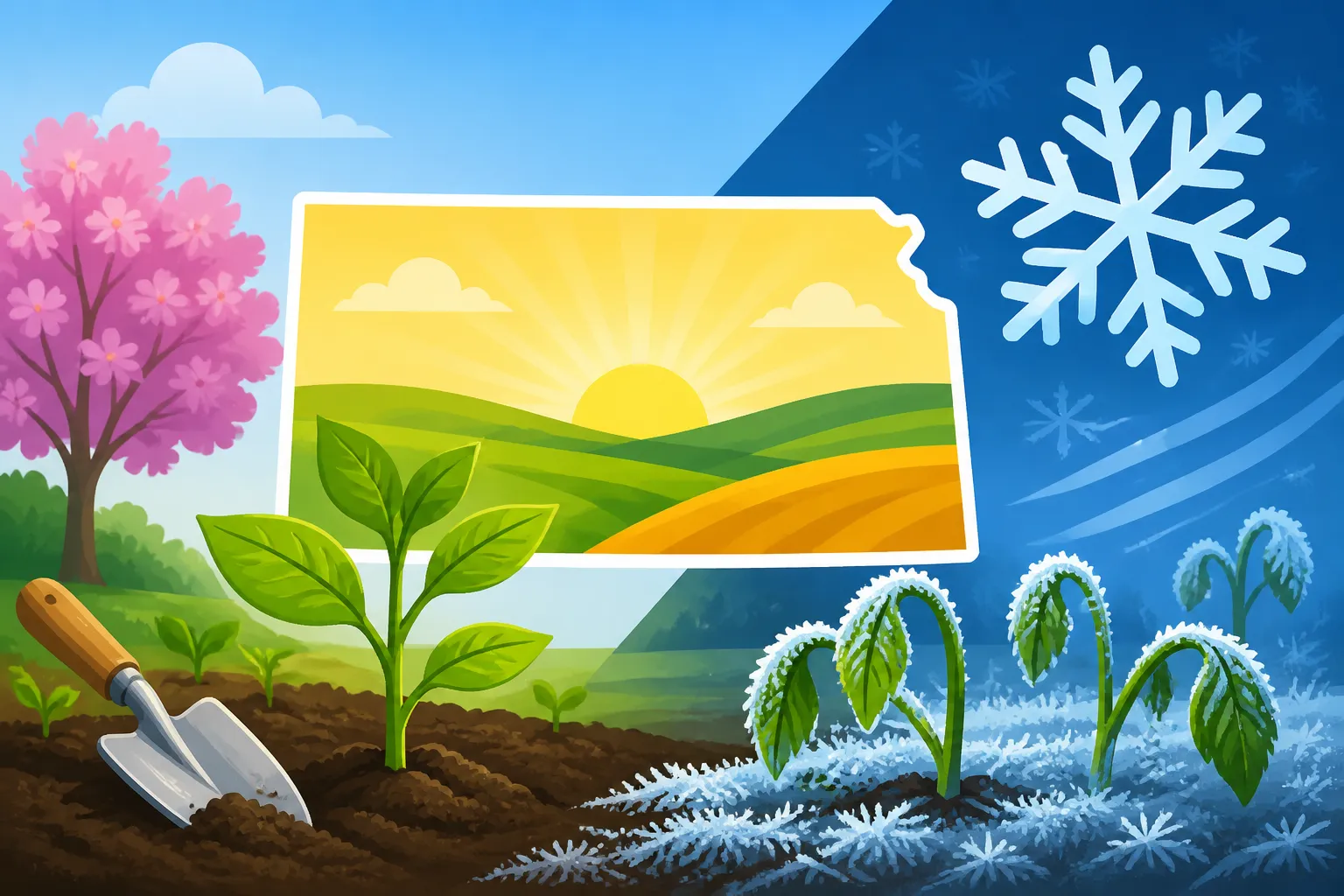
Kansas spring weather can make a planting calendar feel unreliable: a warm afternoon may be followed by a frost, and conditions vary across the state. The solution is not to find one perfect date, but to match each crop to local freeze risk, soil conditions, and its tolerance for cold. This approach helps you plan confidently while leaving room to adjust.
Why spring frost and freeze risks vary across Kansas
Kansas does not have one dependable spring frost date for every garden. Local conditions differ, and a date based on a regional average cannot tell you exactly what will happen in a particular yard. A late freeze can still occur after a stretch of warm weather, while a sheltered garden may escape damage when a nearby exposed site gets cold.
That uncertainty matters because gardeners often use “last frost” as if it were a planting deadline. It is better understood as a planning reference: a way to estimate risk, not a promise that freezing weather is over. The chance of frost changes as the season advances, but it does not fall to zero on a particular day.
For a broader explanation of why dates differ, see Why Kansas Has No Single Statewide Frost Date. Regional variation is one reason planting schedules should be adjusted rather than copied from a statewide calendar. A garden in a cooler northern pocket, a windy open site, and a sheltered urban yard may have different practical planting windows, even if they are in the same general region.
Regional weather is only part of the picture
Your location matters, but so does the shape and exposure of the garden. Cold air tends to settle into low spots, so a bed at the bottom of a slope can be more vulnerable than one higher up. Open areas can lose heat quickly on clear, calm nights. Walls, fences, and buildings may shelter some beds or release stored warmth, though they do not guarantee protection.
A garden close to a large paved area or building may experience different conditions from a nearby open field. Tree cover can also change how quickly a surface loses heat. These small differences are called microclimates. They are useful when planning, but they are not a substitute for checking the forecast: a sheltered bed may avoid light frost and still be exposed to a hard freeze.
If your garden has a history of getting frost after nearby areas have warmed, treat that as useful local evidence. Keep notes on where frost appears first, which beds stay warmer, and which plants are damaged. Your own observations can help refine a regional calendar over time.
Frost-date estimates show risk, not certainty
Weather stations record conditions at a particular location. Their averages and probability estimates can help you compare the relative risk of spring frost, but they describe the station and its record, not every backyard. The estimate may differ from what happens at your home because of elevation, slope, wind exposure, nearby structures, and other local factors.
A date with a lower chance of frost is not a guarantee of frost-free weather. It means the risk is lower according to the period and station used to calculate it. When using a frost-date estimate, check what probability it represents and which station or period it comes from. Do not treat different estimates as interchangeable if they use different probabilities or sources.
Local forecasts answer a different question. They tell you what conditions may be expected over the coming days, while frost-date estimates describe longer-term patterns. Use both: the estimate to plan a general window and the current forecast to decide whether it is safe to plant or whether young plants need protection.
Understand what frost and freeze conditions can do
Gardeners sometimes use frost, freeze, and cold snap as though they mean the same thing. They overlap, but the distinctions matter when deciding how to respond.
Frost is ice crystals that form on exposed surfaces when conditions are cold enough. Plants can be damaged even if the thermometer reading at a nearby weather station does not appear especially severe. The temperature at leaf level can differ from the temperature measured at a station, and plants in exposed areas may cool more quickly than those under cover.
A freeze refers to air temperatures reaching or falling below the freezing point of water. The damage depends on how cold it gets, how long the cold lasts, the plant species and growth stage, and whether the plant is sheltered. A brief light frost is not equivalent to a prolonged or more severe freeze.
A cold snap can harm plants without producing visible frost. Cold wind, a sharp drop in temperature, or repeated cool nights may slow growth or injure tender plants. Cool, wet soil can also delay establishment even when daytime temperatures seem comfortable.
How plant stage changes risk
A crop’s sensitivity is not fixed through its life. Seeds underground are often less exposed to a short spell of cold than newly emerged seedlings, though cold soil can delay germination or cause uneven emergence. A plant with several established leaves may tolerate conditions that would injure a fresh transplant. Flowers and developing fruit can be vulnerable even when the plant itself survives.
This is why a planting calendar should consider more than the name of a crop. It should account for what stage the plant will be in when cold weather is possible. A transplant set out early may be small and unestablished during a freeze window. The same crop planted later may encounter warmer soil and fewer cold nights, but have less time to mature before summer heat or fall cold arrives.
Frost damage may not be obvious right away
After a cold night, some plants show damage quickly: leaves may look water-soaked, darkened, limp, or scorched. Other injury takes longer to appear. A damaged growing tip can stop new growth, and a plant may remain alive but grow unevenly. Fruit or flowers can be injured without obvious damage to the rest of the plant.
Wait until conditions improve before deciding that every affected plant is dead. If the roots and growing point survive, new growth may appear. Avoid heavy pruning or removing a plant based only on its first appearance after a cold night. Give it time to show which parts are still healthy.
Build a planting calendar around risk, not a single date
A useful calendar is a set of flexible windows. It identifies what can be planted under cooler conditions, what needs warmer soil, and what should wait until the risk of damaging cold has declined. It also leaves space for local forecasts and unexpected weather.
Use the table as a planning framework rather than a dated schedule. A crop’s variety, growing method, soil condition, and local site can all shift the best time to plant.
| Crop or planting group | General spring approach | Main risk to watch | Useful adjustment |
|---|---|---|---|
| Cold-tolerant vegetables | Often fit earlier planting windows | Cold soil may slow growth; seedlings can still be damaged by severe cold | Check soil condition and forecast before sowing or transplanting |
| Cool-season crops started indoors | Set out when plants are ready and conditions suit the crop | Tender transplants may be set back by a freeze | Harden plants gradually and keep protection ready |
| Warm-season vegetables | Wait for warmer soil and lower freeze risk | Frost or freeze can seriously damage tender growth | Delay planting when the forecast remains unsettled |
| Heat-loving crops sown outdoors | Wait until soil has warmed adequately | Seeds may emerge poorly in cold soil | Use soil conditions, not just a calendar date |
| Flowers and ornamentals | Match timing to the species and its cold tolerance | Newly planted growth may be exposed or poorly established | Check the plant’s hardiness and protect vulnerable new growth |
The table is intentionally broad. “Cold-tolerant” does not mean immune to all cold, and “warm-season” does not mean every warm afternoon is a safe planting signal. When deciding on a specific crop, check its recommended growing conditions and the expected weather near your garden.
For a region-by-region approach, see Adjusting Kansas Vegetable Planting and Harvest Dates by Region. Kansas Seasonal Gardening Calendar: Spring Thaw to Fall Frost can help put spring planting into a longer seasonal plan, while Planning Around Kansas Freeze Windows and Seasonal Temperature Swings focuses on the uncertainty that a single date cannot capture.
Use more than one source of timing information
A dependable planting decision combines several kinds of information:
- Regional frost estimates: Use them to understand typical risk and compare locations, not to set a guaranteed date.
- Short-range forecasts: Check expected overnight lows and the chance of frost or freezing conditions before planting or leaving seedlings exposed.
- Soil condition: Check whether soil is workable and warm enough for the crop. Cold, saturated soil can be a poor planting environment even after a mild afternoon.
- Crop guidance: Check whether the crop is suited to cool or warm conditions and whether it is usually direct-sown or transplanted.
- Your garden’s microclimate: Note which spots are more exposed, lower, windier, or better sheltered.
When these signals disagree, choose the more cautious option for a tender crop. Waiting a short time can be less costly than replacing plants or accepting a long setback. For cool-tolerant crops, the balance may be different: delaying too long can push growth into warmer weather that they do not handle as well.
Time crops according to cold tolerance and planting method
One calendar date cannot safely cover every vegetable. A garden often includes crops that can be sown while spring is still cool and others that are easily damaged by cold. Organizing the plan by tolerance makes it easier to decide what can go in now and what should wait.
Cool-season crops can use earlier windows
Cool-season vegetables generally fit earlier in spring than heat-loving crops. They may grow well in cooler conditions, but they still need suitable soil and weather. A severe freeze can injure young plants, and cold, wet ground can slow establishment.
Direct sowing and transplanting have different risks. Seeds are not exposed to wind and frost in the same way as leaves above ground, but they depend on suitable soil conditions to germinate. Transplants already have leaves and can be set back by sudden cold. The right choice depends on the crop and how well it handles disturbance.
For more detail on those trade-offs, see Direct Sowing vs Transplants for Kansas Cool-Season Crops. If you are starting seedlings indoors, Indoor Seed Starting for Kansas Garden Crops can help you plan the lead time without leaving plants indoors so long that they become crowded or difficult to harden off.
Warm-season crops need a more cautious threshold
Tomatoes, peppers, beans, cucumbers, squash, and other warm-season crops should not be planted simply because the weather has been pleasant for several days. Tender plants can be damaged by frost, and cold soil can slow their establishment. A sunny spell may also be followed by a sharp drop in temperature, so the forecast matters more than the afternoon high.
Tomatoes and peppers are particularly tempting to plant early because gardeners want a head start. But a plant that sits in cold soil and struggles is not necessarily gaining time. For tomato transplants, use When to Move Tomato Transplants Outdoors in Kansas alongside local forecasts and conditions in the bed. For peppers, Hardening Off Kansas Pepper Starts Before Setting Out covers the transition from indoor growth to outdoor exposure.
Direct sowing and transplants require different decisions
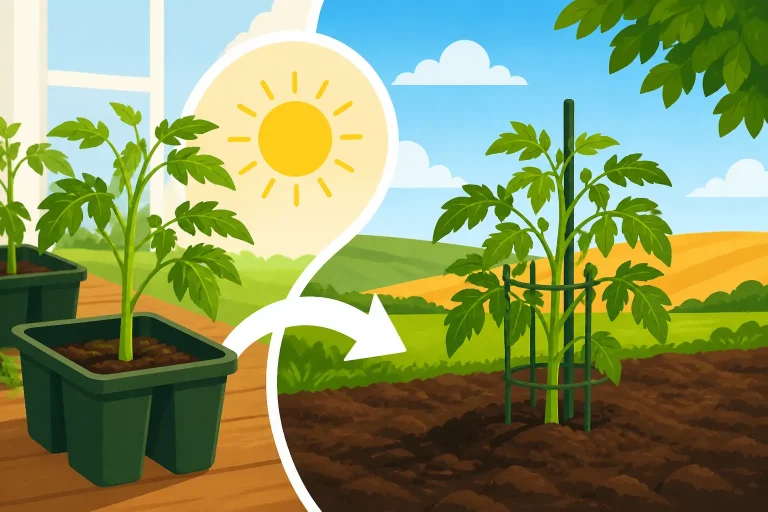
Direct-sown crops face the temperature and moisture conditions of the seedbed. If soil is too cold or wet, emergence may be slow or uneven. Transplants begin with a head start, but moving them outside creates a new risk: they must adjust to stronger light, wind, and changing temperatures.
Hardening off helps seedlings make that transition gradually. It does not make a tender crop frost-proof. A well-hardened transplant can still be injured by a freeze, so continue to check the forecast after planting. For a schedule-oriented overview, see Starting Seeds, Hardening Transplants, and Spring Planting in Kansas.
If a cold night is forecast soon after transplanting, consider waiting if the plant has not yet been set out. If it is already in the ground, a temporary cover may reduce exposure, but its effectiveness depends on the material, how it is installed, and the severity and duration of the cold. Do not assume a cover can protect plants under every freeze condition.
Consider crop maturity as well as frost risk
Planting too late has consequences too. Some crops need a certain period of suitable growing conditions to mature, and a delay may affect harvest timing. A longer-season variety may be a poor fit for a garden that starts late, while a quicker-maturing option may be more practical. Seed packets and variety descriptions can help you compare maturity expectations, but actual performance changes with weather and growing conditions.
The goal is not to eliminate all risk by waiting indefinitely. It is to avoid exposing a crop to an unnecessary early freeze while still leaving enough time for it to grow. If the ideal window has passed, check whether a faster-maturing variety or a later planting opportunity makes sense. Missed the Spring Planting Window? Second Chances for Kansas Gardens offers ways to think about those later options.
Use forecasts, soil conditions, and garden observations together
The forecast is essential when frost or a freeze is possible, but forecasts are not a complete planting calendar. A forecast is about expected conditions over a short period; it cannot tell you whether the soil is ready or whether a crop is suited to the timing. A frost-date estimate helps with longer-term planning, but does not predict the exact night a frost will occur.
Check overnight conditions, not just daytime highs
Warm afternoons can encourage planting, but cold injury usually occurs overnight or near daybreak. Before sowing or transplanting, look at the expected overnight lows and any forecast discussion of frost or freezing conditions. Also consider whether the garden is likely to be colder than the forecast location.
A forecast for a nearby town may not represent a low-lying garden outside the built-up area. If your site tends to cool quickly, use a cautious margin rather than relying on a forecast that is close to the crop’s limit. Forecasts change, so check again as the planting day approaches.
The following habits make forecast checks more useful:
- Look for several nights of expected conditions, not just the first night after planting.
- Pay attention to frost or freeze wording as well as the predicted low.
- Recheck the forecast when conditions change or a cold front is expected.
- Keep track of how your garden compares with the forecast during calm, clear nights.
- Have a plan for vulnerable transplants before a cold night is imminent.
For help interpreting the role of weather stations and longer-term data, see How Kansas Weather Stations Help Gardeners Gauge Spring Frost Risk. Reading Spring Freeze Odds to Time Kansas Garden Crops is another useful companion when you want to interpret probability rather than treat a date as a guarantee.
Check the soil before working or planting
A bed that looks dry on the surface may still be wet below, and recently thawed soil may be too damp to work without causing compaction. Digging, walking, or planting in wet soil can damage its structure. If the soil clumps heavily or smears when handled, waiting for it to dry can be better than trying to meet a calendar target.
Temperature matters too. Warm-season seeds and transplants generally need warmer soil than cool-season crops. Air temperature alone does not tell you whether the soil has warmed enough. If you use a soil thermometer, take readings at the depth relevant to the seed or root zone and compare them with crop-specific recommendations.
If you do not have a thermometer, use crop guidance and repeated observations rather than guessing from one warm day. Sun-exposed raised beds may warm sooner than shaded or heavy in-ground soil, but their conditions can also change quickly. The same planting day may be reasonable in one bed and premature in another.
Keep a simple garden record
A notebook or digital log can improve future decisions. Record sowing and transplanting dates, the location of each planting, frost or freeze warnings, protection used, and what happened afterward. Note both failures and successes. For instance, if one bed repeatedly experiences frost later than another, that pattern can guide where you place tender crops.
Record the source of any frost-date estimate too. Include the station or region and the probability associated with the estimate. That makes it easier to compare like with like and avoids treating a date from one location as a precise prediction for another.
Do not let a single year determine every future planting decision. Weather varies, and an unusually warm spring can create false confidence. Use records to understand your garden’s tendencies, then combine them with the current season’s forecasts.
Protect plants when a spring freeze is forecast
Protection can reduce risk, but it is not a promise that tender plants will survive every cold event. The right response depends on the forecast, crop, plant size, location, and available materials. A light cover may help during a brief, mild event, while a more severe or prolonged freeze can overwhelm simple measures.
Decide whether to wait or cover
If plants are not yet in the ground, delaying a few days may be the simplest option when the forecast calls for freezing conditions. If seedlings have already been transplanted, or a crop is established, temporary protection may be worthwhile. For direct-sown crops, a cover may protect seedlings, but it can also affect light, moisture, and airflow if left in place too long.
Use materials intended for garden covering or another suitable cover that can be secured without crushing plants. Keep the cover from resting directly on tender leaves when possible, because leaf contact with cold material can increase injury. Secure edges so wind does not lift the cover. Remove or vent it when conditions warm to prevent overheating and excess moisture buildup.
A cover should extend beyond the plants to help shield the area around them. Containers, raised beds, and in-ground beds may respond differently because they hold and lose heat at different rates. Do not rely on a plastic cover touching plant foliage as a universal solution; its performance depends on the setup and weather.
Water and soil moisture need judgment
Moist soil can retain heat differently from dry soil, but watering is not a guaranteed frost remedy. The condition of the bed, the crop, drainage, and the expected weather all matter. Avoid turning a poorly drained bed into a cold, saturated one. If you are unsure whether watering is appropriate, consult crop-specific advice or a local extension office.
Do not use irrigation or any other method that depends on precise timing unless you understand the requirements and can follow reliable local guidance. A method that is protective under one set of conditions may fail or cause damage if used incorrectly.
Move containers when practical
Potted plants are more exposed to temperature changes than many plants rooted in the ground. If a tender crop is in a movable container, shifting it to a sheltered location may reduce exposure. A garage or protected porch can help if it remains above freezing and has suitable light and ventilation for the length of the stay.
Avoid moving a plant into a hot indoor space and then back outdoors without allowing it to adjust. Sudden changes in temperature, light, and humidity can add stress. Check containers for drainage and do not leave them in a location where cold air pools.
Avoid common protection mistakes
- Do not assume a row cover or blanket will protect plants against any freeze.
- Do not leave a cover in place through warm, sunny conditions without checking underneath.
- Do not place heavy materials on fragile growth.
- Do not plant tender crops early just because you own protective materials.
- Do not treat a frost warning as a reason to overwater or fertilize plants.
- Do not judge a plant’s survival immediately after the cold night.
If a freeze is forecast, the most useful preparation is having materials ready before evening, knowing which plants are most vulnerable, and checking the weather again. Last-minute protection is harder to install well and may not be effective if wind or severe cold is involved.
Recover after a frost and improve next season’s plan
After a cold night, assess the garden gradually. Some damage is visible by morning; other symptoms may take time to develop. Check the forecast for the next few nights before removing all protection or replanting. A second cold event can cause further injury to plants that are already stressed.
Wait before removing damaged plants
Look at leaves, stems, and growing points. Leaves that are limp or darkened may be damaged, but that alone does not confirm that the whole plant is dead. If the stem base or growing point remains healthy, the plant may recover. Give it a little time to show new growth before making a final decision.
Avoid pruning away every damaged leaf immediately. Some damaged tissue can still help protect healthy portions, and early pruning can remove viable growth. Once you can distinguish dead tissue from healthy growth, tidy the plant as appropriate for that crop.
For seedlings that do not recover, reseeding may be possible if there is enough growing time left. For transplants, replace only after checking the upcoming forecast and soil conditions. Replanting into a cold, wet bed can expose the replacement to the same problem.
Diagnose the cause before changing the calendar
A plant that struggles after planting may have suffered frost injury, but cold is not the only possible cause. Poor drainage, transplant shock, dry soil, root damage, pests, or unsuitable planting depth can produce similar symptoms. Look for patterns: did several sensitive crops decline after the same cold night, or did one plant fail in a wet spot while its neighbors stayed healthy?
If symptoms are confusing or keep spreading, use reliable diagnostic advice rather than guessing and treating at random. Diagnosing Plant Pests and Diseases in Kansas Gardens can help sort out what information to gather and where to look for help.
Refine your plan without overreacting
A single frost does not mean your entire calendar was wrong. Consider the crop and stage, the location, the forecast, and the type of protection used. If an early planting survived, note what conditions made it possible; if it failed, record what happened and whether waiting would have helped.
Next season, you might shift only the most vulnerable crops to a later window while keeping cool-season sowings earlier. You could also reserve a sheltered bed for tender transplants, use movable containers for a small number of heat-loving crops, or stagger sowings to spread the risk. A few small adjustments are often more practical than delaying every crop.
Keep your calendar flexible. Write the frost estimate as a reference range or risk marker, not as a single guaranteed date. Mark the time when you should begin checking forecasts more closely, and identify the crops that need protection first. That turns an uncertain spring into a series of manageable decisions.
Frequently Asked Questions
Is the last spring frost date a safe planting date?
No. It is a planning estimate, not a guarantee. Frost can occur after a date used as a regional reference, and your garden may be colder or warmer than the station behind the estimate. Check the current forecast and crop-specific guidance before planting tender crops.
Can I plant after several warm days?
Warm days alone are not enough to judge risk. Check overnight forecasts, soil temperature and moisture, and the crop’s tolerance. A sudden cold front can follow mild weather, and a warm afternoon does not guarantee that the root zone is ready.
Are cool-season vegetables safe from frost?
Not always. Many cool-season crops tolerate cooler conditions better than warm-season crops, but tolerance varies by crop, growth stage, and severity of the cold. Young seedlings and transplants may still need protection during a damaging freeze.
Does a cover make tender plants frost-proof?
No. A cover can reduce exposure in some conditions, but effectiveness depends on the material, installation, wind, and duration and severity of the cold. Follow crop-specific guidance and do not assume a cover can protect plants through every freeze.
Should I replace plants that look damaged the morning after a frost?
Not necessarily. Some plants recover if the growing point or stems remain healthy. Wait for conditions to improve and give the plant time to show new growth before removing it. Check the forecast for additional cold before replanting.
Disclaimer
This article is for general informational purposes only and does not constitute professional advice. Laws, prices and regulations vary by location and change over time. Consult a qualified professional for guidance on your specific situation. Kansas Gardening Guide is not a government agency and is not affiliated with any university extension, state department of agriculture or other government agency.