When to Move Tomato Transplants Outdoors in Kansas
Moving tomato transplants outdoors too early can leave them stalled, damaged by cold, or exposed to a late freeze. Waiting for the calendar alone is not a reliable fix, either: Kansas weather and garden conditions vary. Use frost risk, soil warmth, plant readiness, and a gradual transition to decide when your tomatoes are ready to leave the shelter of indoors.
Choose a planting window by conditions, not a single date
Tomatoes are warm-weather plants, so transplanting is safest once the danger of frost has passed and conditions are staying mild. A sunny stretch can make spring feel settled, but a brief warm spell does not guarantee that cold weather is over. Check the forecast for your area as planting approaches, and be prepared to wait if chilly nights or a freeze are in view.
Kansas gardeners do not all face the same spring conditions at the same time. Local weather, exposure, and the way a particular yard holds heat can affect how quickly a bed becomes suitable for tomatoes. A planting date that works in one community—or in a sheltered urban garden—may be premature elsewhere. For a broader look at regional timing, see Adjusting Kansas Vegetable Planting and Harvest Dates by Region and Regional Planting Differences Across Kansas Counties.
The important question is not simply, “Is it warm today?” Consider the pattern. Are temperatures likely to remain comfortable for the plants, or is a cold front expected? Has the soil had a chance to warm, or is it still cold and damp? Have the seedlings been prepared for outdoor conditions? If those checks point in different directions, postponing the move is often the lower-risk choice.
A transplant can survive a chilly spell and still struggle afterward. Cold stress may slow establishment, leaving a plant vulnerable to further stress from wind, dry soil, or abrupt exposure to strong sun. Giving tomatoes a more favorable start does not guarantee a particular harvest, but it avoids asking young plants to cope with conditions they are not ready for.
Use a local forecast as one input rather than a promise. Forecasts can change, and conditions in a garden can differ from those at a weather station. A low spot may stay colder than a sunny, sheltered bed. A raised or exposed site may warm quickly during the day but lose heat quickly at night. If you garden in a spot that tends to be colder, be more conservative than a general calendar suggests.
For context on why a statewide date can mislead, read Why Kansas Has No Single Statewide Frost Date. The article Kansas Planting Calendar: Spring Frost and Freeze Risks can also help you think about spring planting as a window of risk, rather than a fixed appointment.
Check the seedlings, soil, and garden site before planting
A transplant is not ready just because it has reached a convenient size indoors. Look for a plant that is healthy, sturdy, and actively growing, with a root system that can hold the growing medium together without being tightly congested. Pale, weak, or badly stretched seedlings may need better light and steady care before they face outdoor conditions.
Avoid treating a large plant as automatically more ready. If it has become crowded in its pot, it may need attention, but size does not make it tolerant of cold. A healthy, compact transplant that has been acclimated to outdoor conditions is generally a better candidate than a taller plant that has spent its whole life in a protected indoor setting.
The bed matters as much as the seedling. Tomatoes establish more readily when the soil is workable and has warmed, rather than waterlogged and cold. Soil that feels cool and stays wet after rain can slow early growth. A sunny, sheltered spot may warm sooner than a shaded or wind-exposed one, but do not assume that daytime sun protects a plant from a cold night.
Before planting, check whether water drains away reasonably well and whether the site gets the light tomatoes need. If the bed remains saturated, address the drainage problem or choose another growing location rather than putting a transplant into persistently wet ground. For help deciding between a raised bed and an in-ground site, see Amending In-Ground Garden Soil vs Setting Up Raised Beds and Choosing the Right Soil Mix for Raised and In-Ground Garden Beds.
Wind exposure can compound transplant stress. A newly planted tomato has not yet rooted into the surrounding soil, so strong wind can dry it out and rock the stem. If the garden is exposed, consider a sheltered planting spot or a way to reduce wind on the bed without shading the tomatoes or obstructing airflow. Garden Windbreaks for Protecting Kansas Vegetable Beds covers ways to think about exposure.
Before you plant, make sure the bed is prepared and you can water it. Transplanting into dry soil and then leaving the plant without follow-up moisture can make establishment harder. On the other hand, continually keeping the soil saturated is not a good substitute for attentive watering. Aim for moisture that reaches the root area while allowing excess water to drain.
If the soil or weather is not suitable, keep the transplant protected and wait. Do not leave it in a hot, cramped indoor space indefinitely, but also do not use a clear, sunny afternoon as the only reason to put it outside permanently. The goal is to match a prepared plant to a suitable site and a reasonably stable stretch of weather.
Harden transplants before the permanent move
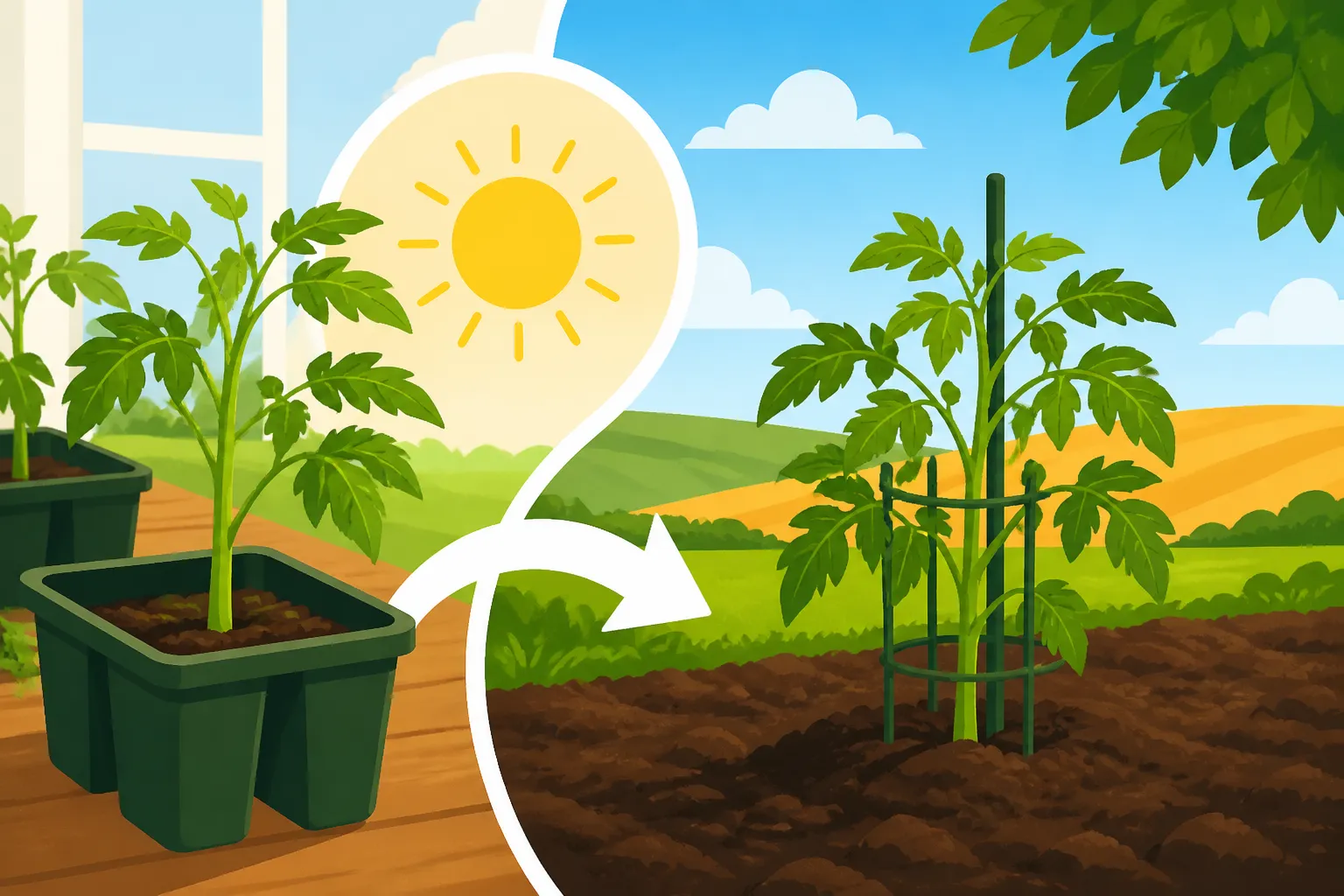
Indoor-grown tomatoes have not experienced outdoor sun, wind, or changing temperatures in the same way as plants growing outside. Move them directly from a protected indoor location into full outdoor exposure and they may wilt or develop leaf damage. Hardening off is the gradual transition that helps reduce that shock.
Kansas State University Agricultural Experiment Station and Cooperative Extension Service advises: About 10 days before the transplanting date, harden transplants by exposing them gradually to outdoor conditions.
Start the transition in a sheltered place and keep the first exposure modest. Avoid placing tender seedlings straight into intense midday sun or strong wind. As the plants adjust, gradually increase their time outdoors and their exposure to sun and breeze. Bring them back under cover when conditions turn sharply cold, windy, or otherwise unsuitable.
Hardening is a process, not a single outdoor outing. Watch the leaves and overall condition of the plants between exposures. If a seedling wilts badly or shows signs of stress, provide shelter and allow it to recover before increasing exposure. Do not confuse temporary adjustment with a reason to leave a struggling plant outdoors.
Keep track of changing weather during the transition. Hardening plants outdoors does not mean they are ready to tolerate a freeze. If frost or harsh conditions threaten, protect the seedlings or bring container-grown plants back inside. Resume the gradual transition once conditions improve.
Seed packets and transplant instructions can provide useful, variety-specific context, but they do not replace local weather checks. If you started a variety from Botanical Interests seed, consult its packet for details relevant to that variety, then adapt the timing to the conditions in your garden. For more on the transition process, see Hardening Off Kansas Pepper Starts Before Setting Out and How Long Should You Harden Seedlings Before Planting in Kansas?.
Plan ahead so hardening does not begin only when you happen to have a free afternoon. If you expect to plant soon, make room for the transition in your schedule. If an approaching cold spell interrupts it, pause outdoor exposure as needed rather than rushing the plants to meet a planned date.
Transplant carefully and protect plants from setbacks
Once the weather, soil, and seedlings are ready, choose a calm part of the day for planting. Avoid handling the plants roughly, especially around the stem and root ball. Watering the seedlings before transplanting can help keep their growing medium from crumbling as you move them. Have the planting area ready first so roots are not left exposed while you prepare the bed.
Set each plant into the prepared soil and firm the soil gently around the root area. Water after planting to settle the surrounding soil and help the roots make contact with it. Continue checking moisture as the plants establish. The surface can dry while the root zone remains moist, so use the condition of the soil near the roots—not the appearance of the top layer alone—to guide watering.
New transplants need attention, but they do not benefit from constant disturbance. Check them regularly for signs of wilting, drying, or damage, and make practical adjustments to water or shelter. A plant that droops in hot sun may be stressed by heat or moisture conditions; one that remains limp in wet soil may have a different problem. Look at the soil and the weather as well as the leaves before deciding what to change.
A late cold snap is the main reason to keep protection ready after planting. Follow local forecasts and take action when a frost or freeze threatens. Temporary protection can reduce exposure, but it should not be treated as a guarantee against severe cold. If a freeze is expected and a plant is already in the ground, use suitable protection and check the local weather notice for the situation.
Wind, heavy rain, and sudden temperature swings can also set back a newly planted tomato. A secure support placed without damaging the roots can help later as the plant grows, while a sheltered location can reduce stress from wind. Avoid making unnecessary changes all at once: the transplant is already adjusting to new soil, light, and air.
Do not judge success only by immediate growth. A transplant may pause while it establishes roots, especially after a change in conditions. If the leaves remain healthy and the plant begins to resume growth, that is more useful than expecting rapid development from the first day. If a plant deteriorates, review the recent weather, soil moisture, drainage, and exposure before assuming it needs fertilizer or another treatment.
For a wider warm-season planting overview, see Safe Planting Windows for Warm-Season Garden Vegetables and Avoiding Late Spring Freezes with Warm-Weather Crops. If you are considering other crops at the same time, Starting Kansas Vegetable Transplants: How Many Weeks Indoors? explains how indoor timing fits into the broader planting plan.
Plan space and care around the move outdoors
A successful transplanting day is only the start. Before planting, decide how the tomatoes will fit in the bed and how you will reach them for watering, support, and harvest. Crowded plants can be harder to inspect and manage, while a layout that leaves room to move through the garden makes routine care more practical. Follow the spacing guidance for the variety and growing method rather than relying on a single layout for every tomato.
For a 10-foot row, Kansas State University Agricultural Experiment Station and Cooperative Extension Service gives an approximate planting per person of 3–5 plants. Treat that as a planning reference, not a requirement: the right number for a garden also depends on the available space, the variety, and how much fruit the household expects to use.
Make sure support is ready before the plants become difficult to handle. A stake, cage, or other support can be placed at planting or soon after, with care to avoid injuring the roots. The best choice depends on the plant’s growth habit and the amount of space available. A support plan also makes it easier to keep fruit and foliage from resting on the soil.
Watering needs can change as the weather warms and the plants grow. Check the soil near the root zone and account for recent rain, sun, and wind. A quick look at the surface is not always enough to tell whether the plant needs water. For more help, see How to Tell if Kansas Garden Plants Need Water in Summer and Watering Kansas Garden Vegetables: Avoiding Wet and Dry Soil.
A layer of mulch can help limit moisture loss and reduce soil splash, but add it with the bed’s conditions in mind. If the ground is still cold and wet, do not use mulch as a substitute for allowing the soil to warm and drain. For advice about mulch in Kansas vegetable beds, see How Mulch Conserves Garden Soil Moisture in Kansas Summers.
Keep an eye on the forecast after transplanting, especially while plants are still establishing. If cold weather threatens, protect the plants; if heat, wind, or dry conditions arrive, check that the root area has suitable moisture. A simple routine—look at the weather, inspect the plants, and check the soil—helps prevent a small problem from becoming a prolonged setback.
| What to check | A good sign | If conditions are not ready |
|---|---|---|
| Frost risk | The local forecast does not show a threatening frost or freeze | Wait or keep plants protected |
| Temperatures | Conditions are settling into a mild pattern | Delay the permanent move |
| Soil | The bed is workable, warming, and not persistently waterlogged | Wait for better soil conditions or choose a better-drained site |
| Seedlings | Plants are healthy and have been gradually exposed to outdoor conditions | Improve their care and continue hardening |
| Garden site | The planting area has suitable light and manageable wind exposure | Choose a more suitable location or reduce exposure |
No checklist can guarantee that spring weather will cooperate. The practical aim is to avoid a rushed transplanting decision: wait for suitable conditions, acclimate the plants, and keep protection available after planting. That approach is more dependable than treating a holiday, a warm afternoon, or an indoor seed-starting schedule as a promise that the garden is ready.
Frequently Asked Questions
Is a warm afternoon enough to move tomato transplants outdoors?
No. Consider the forecast beyond that afternoon, the possibility of frost, and whether the soil has warmed. A brief warm spell does not show that conditions will remain suitable.
Should tomato seedlings stay indoors if a cold night is expected?
Keep vulnerable seedlings protected during a threatening cold spell. Container-grown plants can be moved under cover; seedlings already planted need appropriate protection based on the forecast and local conditions.
Can a tomato transplant go straight from indoors into a sunny garden bed?
It is better to acclimate it gradually. Indoor plants are not used to outdoor sun and wind, so a sudden change can stress them. Increase outdoor exposure over time and provide shelter when conditions are harsh.
What if a transplant wilts after planting?
Check the soil near the roots and consider recent sun, wind, temperature, and rainfall. Wilting can have more than one cause, so do not assume that adding more water is the right response if the soil is already wet.
Sources
- Kansas State University Agricultural Experiment Station and Cooperative Extension Service — Kansas Garden Guide S51 (PDF) (checked November 15, 2026)
Disclaimer
This article is for general informational purposes only and does not constitute professional advice. Laws, prices and regulations vary by location and change over time. Consult a qualified professional for guidance on your specific situation. Kansas Gardening Guide is not a government agency and is not affiliated with any university extension, state department of agriculture or other government agency.