Why Kansas Has No Single Statewide Frost Date
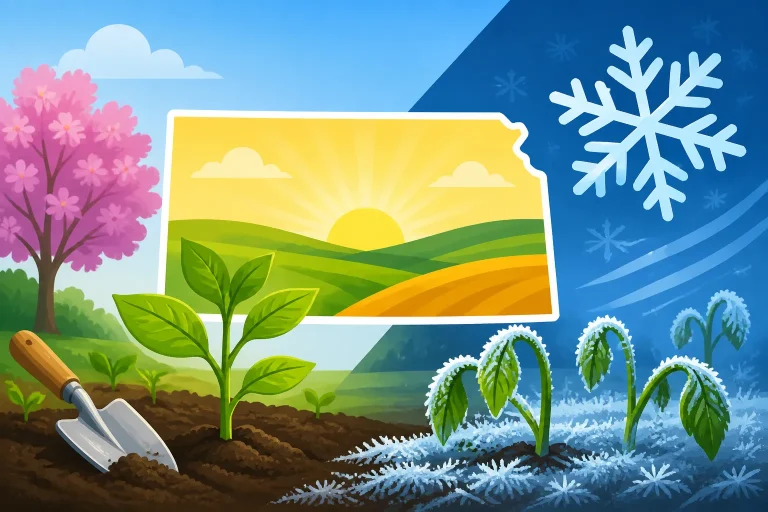
A frost date can look like a dependable planting deadline, but it is a probability based on a particular place and period—not a promise about what will happen in every Kansas yard. Regional weather, landscape features, and each crop’s cold tolerance all matter. Understanding those differences helps you turn frost information into a flexible planting plan instead of a risky statewide rule.
A frost date is a probability, not a guarantee
A “last frost date” is often treated as the day after which frost cannot happen. That is not what the term means. It describes a likelihood estimated from weather records for a specific station or area and a specified period. A date associated with a lower chance of frost is more conservative than one associated with a higher chance, but neither guarantees that a late frost will or will not occur.
The same principle applies to a fall “first frost date.” It is a planning estimate, not a countdown that tells you exactly when the growing season will end. A garden may avoid frost after a typical first-frost date, or it may experience cold earlier. The weather pattern in any particular year can depart from the historical pattern.
That uncertainty is why a frost date should be one input in a planting decision, not the decision itself. You also need to consider:
- Your location: A weather station’s conditions may differ from those at your home.
- The probability behind the date: A date with a greater chance of frost is a less cautious choice for a sensitive crop.
- The crop: Peas and other cool-season vegetables tolerate conditions that can damage tomatoes, peppers, and many other warm-season plants.
- The crop’s stage: A seed in the soil, a small seedling, and a mature plant may respond differently to cold.
- The forecast: A historical average cannot tell you whether a cold night is approaching this week.
- Your yard: A low spot, exposed bed, sheltered patio, or raised bed may have different conditions from nearby locations.
A frost date also does not tell you whether the soil is warm enough for a crop. Warm-season seeds and transplants can struggle in cold, wet soil even when the air is no longer reaching freezing conditions. Likewise, a cool-season crop may grow well in cool weather but suffer during heat that arrives later. Planting decisions need to account for both the air and the soil, as well as the crop’s preferred growing conditions.
This distinction matters across the state. A single calendar date cannot represent the range of local conditions experienced by gardeners in Kansas, and the weather can vary considerably from one year to the next. For more on reading frost likelihood as part of spring planning, see Kansas Planting Calendar: Spring Frost and Freeze Risks and Reading Spring Freeze Odds to Time Kansas Garden Crops.
Why frost risk differs across Kansas
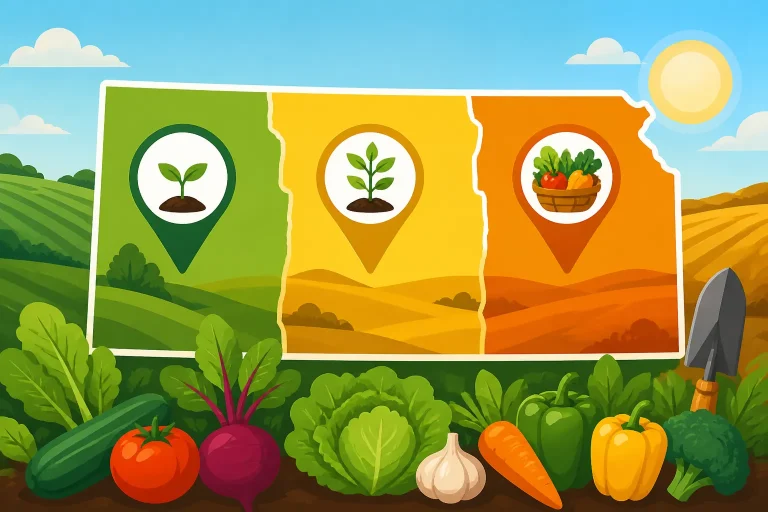
Kansas is large enough that gardeners do not all experience the same seasonal pattern at the same time. A weather station in one part of the state records the conditions at its location; a station elsewhere may show a different pattern. Regional differences in temperature, seasonal weather, and local terrain all affect how useful a particular station is for a garden.
Broadly, gardeners may notice differences between northern and southern parts of the state, and between eastern and western areas. Those broad directions are helpful context, but they do not establish a precise frost date for every county, neighborhood, or planting bed. Local conditions can depart from a regional expectation, and a single cold-air event may affect nearby places differently.
A station represents its own setting
A weather station is a measuring point, not a map of every yard around it. Its readings reflect its position and surroundings. A station near a built-up area, an open field, or a different landform may not match a garden in another setting. Even two places that seem close on a map can have different overnight temperatures.
For that reason, a useful station is generally one that is reasonably representative of your area and landscape. If a single nearby station does not seem to match the conditions at your home, comparing more than one nearby source can help you understand the range. The goal is not to find a date that makes frost risk disappear. It is to use information that gives you a sensible picture of local risk.
Weather stations also record past conditions. Their historical data can help estimate typical patterns, but they cannot predict the exact timing of a particular spring or fall cold snap. A warm early spring may encourage growth and make a later freeze especially disruptive. A cool spring may slow planting and keep tender crops out of the garden longer. Both are possible even when the same historical reference date is used.
Learn how location-based records can inform planning in How Kansas Weather Stations Help Gardeners Gauge Spring Frost Risk. For broader regional timing considerations, Regional Planting Differences Across Kansas Counties and Adjusting Kansas Vegetable Planting and Harvest Dates by Region can help frame why local schedules differ.
Weather varies from year to year
Even within the same location, a frost date is not a fixed appointment on the calendar. One spring may warm gradually, while another has early warmth followed by a sharp cold return. Fall can also bring a long stretch of mild weather or an early cold spell. Historical probabilities describe patterns over a period of records; they do not promise that an individual year will follow the pattern.
This variability creates a practical problem for gardeners: waiting for the most cautious possible date can shorten the useful growing period for some crops, while planting by an optimistic date can expose sensitive plants to damaging cold. There is no choice that removes all risk. A good plan matches the level of risk to the value of the crop, the ease of protecting it, and the time it needs to mature.
Your yard can be warmer or colder than the regional estimate
A regional estimate still needs to be adjusted for the site where you garden. Frost does not settle evenly across a yard. The shape of the land, nearby structures, wind exposure, soil condition, and available cover can all affect a plant’s immediate environment.
Low areas and cold-air movement
On a clear, calm night, the ground and nearby surfaces lose heat. Cooler air can collect in low areas, so a garden in a shallow hollow or at the bottom of a slope may be more exposed to frost than a nearby higher bed. A low spot that is comfortable during the day can therefore be a poor place for an early planting of tender crops.
The effect is not always obvious from a quick daytime inspection. Pay attention to where frost appears first in your yard and where it lingers in the morning. If cold damage repeatedly shows up in the same corner, treat that area as a colder microclimate, even if the regional weather data look favorable.
A slope with good air movement may have different conditions from a sheltered low pocket. That does not mean every sloped bed is automatically frost-safe: wind can also increase stress on plants, and local topography varies. Use your own observations alongside the broader forecast rather than relying on a rule that assumes all slopes or valleys behave alike.
Buildings, trees, and hard surfaces
Structures and mature trees can influence the conditions around a bed. A sheltered spot beside a building may avoid some wind, while a nearby wall or hard surface may retain heat from the day and release it later. Tree cover can reduce exposure to open sky, but shade may also slow soil warming and limit the light available to crops. The net effect depends on the site and the weather.
A sheltered garden can be an advantage during a cold spell, but it should not be assumed to stay above freezing. Protection from wind is not the same as protection from a freeze. If the forecast calls for conditions near or below freezing, a sensitive plant may still need an appropriate cover or a move indoors, depending on its size and location.
Beds, containers, and soil conditions
Raised beds and containers can warm more quickly in some conditions, but they can also lose heat and moisture more readily than in-ground soil. A container is especially exposed because the root area is surrounded by air rather than insulated by the ground. A warm, sunny afternoon does not guarantee that a pot will stay warm overnight.
Soil moisture, texture, and drainage also influence how a bed responds to weather. Wet soil can remain cool and may delay planting even after daytime temperatures feel mild. Poor drainage can add root stress, while a dry bed can behave differently from one with adequate moisture. The frost date alone does not capture these soil conditions.
It helps to keep a simple record of where cold-sensitive plants are growing and how they fare during cold nights. Note which beds warm early, where frost appears first, and where plants recover most slowly. Over time, that yard-specific record can be more useful than trying to force every bed into a single regional planting schedule.
For advice on timing across seasonal swings, see Planning Around Kansas Freeze Windows and Seasonal Temperature Swings. If your main concern is keeping a vegetable bed from drying during the hotter part of the season, Watering Garden Beds During Dry Kansas Summers covers a separate but related challenge: a planting schedule has to work across the full range of conditions, not just the last cold night.
How to use frost information without over-trusting it
Frost information is most useful when you treat it as a range of possible outcomes. Use it to estimate when a crop might be at risk, then adjust for the crop and your location. A simple sequence keeps the decision grounded in evidence rather than a single calendar date.
- Find the closest useful weather information. Look for historical frost information from a station or source that represents your part of Kansas. If two nearby sources differ, note the difference rather than choosing whichever date is more convenient.
- Check what probability the date represents. A frost date is meaningful only with its probability and the station or period behind it. A less cautious probability may be useful for planning a risk-tolerant crop, but it is not a guarantee that frost is unlikely in your specific yard.
- Compare the estimate with the crop’s needs. Separate crops that can tolerate cool weather from crops that are sensitive to cold. The same date should not be used as the planting signal for every vegetable.
- Account for the bed’s microclimate. Adjust your confidence downward if the garden is in a low area, exposed, or prone to early frost. A sheltered site may reduce some exposure, but it does not remove the need to watch the forecast.
- Check current conditions and forecasts. Historical information helps with general planning. A near-term forecast is more relevant when deciding whether to plant or protect seedlings this week.
- Keep a backup plan. Hold back a few seedlings, delay part of a sowing, or be ready to cover or move vulnerable plants when practical. Staggered planting spreads risk rather than putting the entire crop in the ground at once.
The station and period matter because a probability estimate is only as useful as the data and location behind it. Avoid treating a date copied from a broad calendar as if it were specific to your property. If you cannot tell what station or probability an online date represents, it is better to use it only as a rough prompt and seek clearer local information.
You can also think in terms of a planting window, rather than one day. A window gives you room to respond to a cold forecast, wet soil, or a delayed warm-up. It can be especially useful for crops that can be sown more than once. For example, you might sow a portion of a crop when conditions look suitable and reserve another sowing for later. The first planting may give an early harvest, while the later one reduces the chance that the entire crop is affected by a single cold event.
This approach does not require predicting the weather perfectly. It requires making a plan that can absorb a forecast change. Use Sowing Vegetables Around Changing Spring and Fall Freeze Dates and Kansas Seasonal Gardening Calendar: Spring Thaw to Fall Frost to connect seasonal estimates with an adaptable calendar.
Match planting decisions to the crop, not a statewide date
Different vegetables respond differently to cold, heat, and soil temperature. A statewide frost date cannot tell you when every crop should be sown or transplanted because crops do not share the same temperature needs or tolerance.
Cool-season crops
Many cool-season vegetables can be planted while the weather and soil are still relatively cool. Their suitability does not mean they are immune to frost, and seedlings can be more vulnerable than established plants. It does mean that gardeners often have reason to start these crops earlier than tender warm-season crops, provided the soil and forecast are suitable.
Direct sowing can be a practical choice for crops that establish well in place. Transplants can be useful for some crops when a head start is needed, but they may require gradual exposure to outdoor conditions before planting. Compare the options in Direct Sowing vs Transplants for Kansas Cool-Season Crops. For leafy crops, Spring and Fall Planting Calendars for Crisp Kansas Lettuce offers more crop-specific timing considerations.
Keep in mind that cool-season crops can run into a different problem later: rising temperatures. A crop planted too late may face heat before it has time to produce well. This is another reason not to think only in terms of the last frost date. The appropriate window is shaped by both the cold at the start of the season and the heat that may arrive afterward.
Warm-season crops
Warm-season crops such as tomatoes, peppers, cucumbers, and many kinds of beans generally need warmer conditions than cool-season crops. A mild afternoon does not establish that the soil and nights are consistently suitable. These crops can be damaged by cold, and some may stall in cool soil even if there is no frost.
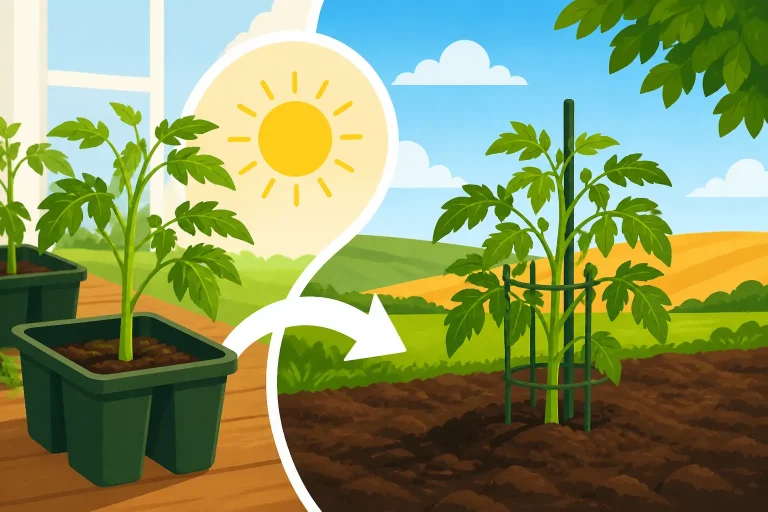
For warm-season transplants, consider the plant’s condition as well as the calendar. A small, tender transplant may need a slower transition outdoors than a well-developed plant that has been properly hardened off. Newly planted seedlings can also be affected by wind, strong sun, and dry soil. Planting on a favorable day is only one part of helping them establish.
Tomatoes are a familiar example because gardeners often want to set them out as early as possible. The date alone cannot tell you whether the soil has warmed, whether nights are likely to remain cold, or whether a sudden cold spell is coming. For crop-specific guidance, see When to Move Tomato Transplants Outdoors in Kansas. For the transition from indoor growing to outdoor planting, Hardening Off Kansas Pepper Starts Before Setting Out explains why a gradual change in conditions matters for another sensitive warm-season crop.
Seeds and transplants face different risks
A seed sown outdoors may remain dormant or emerge slowly if conditions are too cold or wet. That can delay the crop, make emergence uneven, or expose seedlings to a longer stretch of difficult weather. A transplant skips some of the time required for germination, but it may be more exposed above ground and can suffer from shock if moved outdoors abruptly.
Indoor seed starting can give a crop a head start, but starting too early can create overgrown, weak transplants that are difficult to manage before outdoor conditions are ready. The right indoor schedule depends on the crop and on when conditions are expected to support planting outside. Indoor Seed Starting for Kansas Garden Crops and Starting Kansas Vegetable Transplants: How Many Weeks Indoors? cover that relationship.
The practical takeaway is not to assign one date to all crops. Group plants by cold tolerance and growing needs. Make the first planting decisions for crops suited to cool conditions, and wait for more favorable soil and weather before setting out tender crops. Keep a forecast check in the routine, especially when planting sensitive transplants.
| Garden situation | What the frost estimate can tell you | What to check before planting |
|---|---|---|
| Cool-season seeds | Whether the period is broadly suitable for an early sowing | Soil condition, forecast, and whether later heat could cut the crop short |
| Cool-season transplants | Whether cold exposure is a concern during establishment | Seedling hardening, soil moisture, and protection during a cold night |
| Warm-season seeds | Whether cold risk may remain during emergence | Soil warmth, expected overnight conditions, and the crop’s germination needs |
| Warm-season transplants | Whether the plant may be exposed to frost or cold stress | Forecast, soil warmth, transplant condition, and ability to protect or delay |
| Container crops | A broad indication of seasonal risk | Pot exposure, temperature swings, and whether the container can be moved |
| Fall crops | A rough estimate of the approach of cold weather | Days to maturity, crop tolerance, and the time needed to establish before cold |
The table is a planning aid, not a substitute for the needs listed for a particular crop or variety. When in doubt, check the seed packet or plant information and use current local conditions to refine the timing.
Build a flexible Kansas garden calendar
A good garden calendar is not a list of statewide dates. It is a sequence of decisions that you revisit as the season develops. The aim is to use historical risk estimates for advance planning, then make planting choices based on the actual weather, soil, and crop in front of you.
Start with a local reference point
Choose a source of frost information that identifies the relevant station or area and the probability associated with its dates. Keep that information with your garden notes. If you change locations, even within Kansas, reconsider whether the old reference still represents the new site.
Do not turn the reference date into a hard deadline. Instead, mark a span around it when you expect to pay closer attention. A date with a more cautious probability may help you plan for a sensitive crop, while a less cautious estimate may be more useful for a risk-tolerant planting. The particular choice depends on how much risk you are willing to accept and how much protection you can provide.
Sort crops into planting groups
Make separate lists for crops that tolerate cool conditions and crops that need warmth. Add information about whether each crop will be direct-sown or transplanted, how long it takes to mature, and whether you can protect it during a cold night. This prevents the common mistake of applying one frost date to the whole garden.
For each crop, record its expected planting window rather than a single required day. Include any indoor-starting period, hardening period, and the conditions you want before planting. This helps you spot conflicts early. If a transplant is ready but the bed is still cold or a freeze is forecast, you can delay, protect it, or adjust the planting plan rather than rushing it outdoors.
Watch more than the temperature
Frost risk is only one piece of the picture. Before planting, consider:
- The forecast for the next several nights: A warm stretch can be followed by a cold change.
- Soil condition: Wet, cold soil can be unsuitable even when daytime air temperatures are comfortable.
- Wind and exposure: A windy site can stress young plants, and open beds may have less shelter.
- Plant health: Weak, recently moved, or poorly hardened plants may be less able to handle a change in conditions.
- Available protection: Covers, portable containers, or a sheltered location can make a short cold spell easier to manage, but protection should be suitable for the crop and situation.
A forecast is not a guarantee either, but it is a more immediate tool than a historical frost probability when a planting decision is close. If the forecast shifts, adjust your plan. Waiting a few days is often a reasonable alternative to placing all of a sensitive crop at risk.
Use staggered plantings where practical
Planting a crop in stages can reduce the consequences of mistiming. Rather than sowing all the seeds on one day, you can divide the planting into separate sowings when the crop and season allow. This helps spread exposure to weather and can extend harvests. It is not appropriate for every crop or every garden, but it offers a useful buffer when conditions are uncertain.
A similar strategy is to set out only part of a group of transplants first, keeping the remaining plants protected until the forecast is more favorable. That approach may require extra space and care, but it reduces the chance that one cold event affects every plant at once.
Record what happens in your own garden
Keep notes on planting dates, first emergence, cold nights, frost damage, and the locations where plants did best. Include the station or weather source you used and whether the forecast matched what happened in your yard. Over time, these notes help you identify patterns: a bed that warms slowly, a corner that gets frost first, or a sheltered area that is useful for early planting.
Do not treat one season as a permanent rule. A garden log is valuable because it accumulates observations across changing years, not because it makes weather predictable. Use the notes to refine future decisions while continuing to check current forecasts.
If a spring planting does not work out, a missed window may not mean the whole garden is lost. Some crops can be planted later or replaced with a faster-maturing choice, depending on the season and the time remaining. Missed the Spring Planting Window? Second Chances for Kansas Gardens discusses those options. For a broader approach to coordinating sowing and harvest, see Tracking Vegetable Planting and Harvest Schedules in Kansas.
Frequently Asked Questions
Does Kansas have one official last frost date?
A single statewide date cannot represent the conditions experienced across Kansas. Frost information is tied to a location, a weather-record period, and a probability. Use a source that makes those details clear, and treat its date as an estimate rather than a statewide guarantee.
If the forecast says the last frost has passed, is it safe to plant tomatoes?
Not automatically. A historical frost date does not guarantee that a later cold night will not occur. Check the current forecast, soil warmth, and the condition of the transplants before planting. Tomatoes are sensitive to cold, so delaying or protecting them may be sensible when conditions remain uncertain.
Is a frost date the same as a freeze date?
The terms are related but not identical. Frost describes ice crystals forming on surfaces, while a freeze refers to air temperatures reaching freezing conditions. Frost can form under conditions that do not match a simple reading from a distant weather station, and plant damage depends on the crop, exposure, and duration of cold. For garden decisions, consider both the forecast and the plants’ needs.
Should I use the closest weather station?
Start with a nearby station, but consider whether its setting represents your garden. A station’s landscape and exposure may differ from your yard. If the readings seem inconsistent with what you observe, compare appropriate nearby information and rely on your own garden notes as an additional guide.
Can a warm winter or early spring make frost risk disappear?
No. A warm spell can encourage early growth, but it does not prevent a later cold event. Historical probabilities and current forecasts can help with planning, but neither removes weather uncertainty. Keep sensitive crops flexible until conditions are suitable.
Disclaimer
This article is for general informational purposes only and does not constitute professional advice. Laws, prices and regulations vary by location and change over time. Consult a qualified professional for guidance on your specific situation. Kansas Gardening Guide is not a government agency and is not affiliated with any university extension, state department of agriculture or other government agency.