Adjusting Kansas Vegetable Planting and Harvest Dates by Region
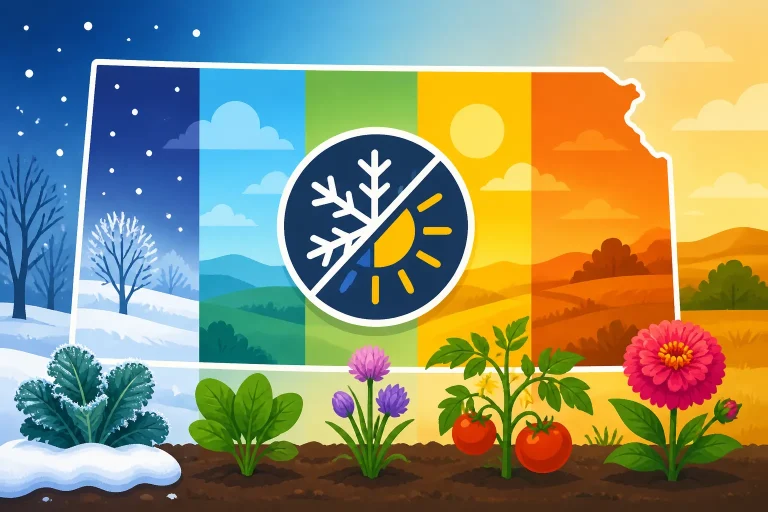
Kansas gardeners cannot rely on one planting calendar: spring warmth, fall freezes, soil conditions, and local exposure vary across the state. A date that works in one part of Kansas may leave seeds waiting in cold soil elsewhere. The practical solution is to use regional frost information as a starting point, then adjust for crop needs and conditions in your own garden.
Why planting dates vary across Kansas
Kansas has a wide range of growing conditions. The timing of spring warmth and fall cold shifts across the state, and even nearby gardens can differ because of elevation, slope, shade, wind exposure, and the way buildings or trees hold heat. A statewide calendar can help you see the sequence of garden tasks, but it cannot predict the safest sowing day for every yard.
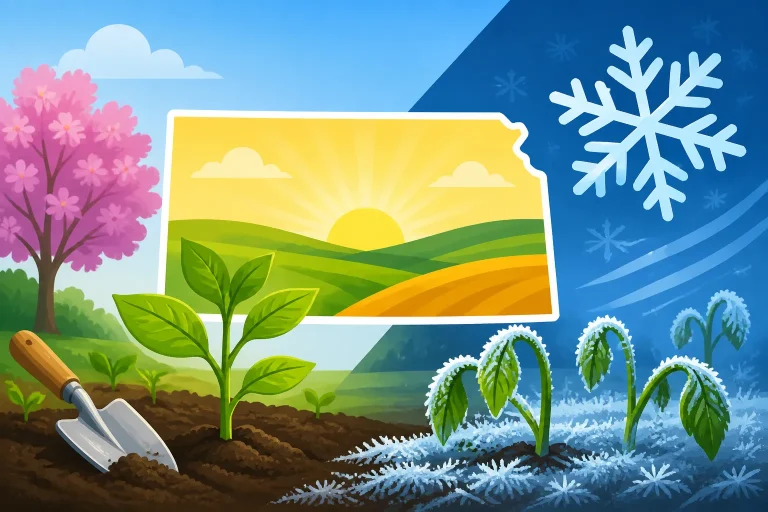
Frost dates are estimates based on past weather, not promises about what will happen this season. A date with a stated probability describes the chance of a frost occurring by that point; it does not guarantee a frost-free stretch afterward. The same is true of fall estimates. For a closer look at why one date cannot represent all Kansas locations, see Why Kansas Has No Single Statewide Frost Date.
The most useful starting point is your area’s local frost information, ideally from a nearby weather station. Use the nearest station as a guide rather than assuming it perfectly matches your garden. A low spot may collect cold air, while a sheltered urban bed or south-facing wall may warm earlier. Conversely, an exposed garden can remain colder or more vulnerable to wind even when a nearby station reports favorable conditions.
Regional differences matter in two ways:
- Spring timing: Cool-season crops can often tolerate cool conditions, but warm-season crops need warmer soil and protection from damaging cold. A warm spell does not erase the risk of a later freeze.
- Fall timing: The first fall frost may end production for tender crops, but hardy crops can often continue growing through cooler weather. Their usable harvest window depends on the crop, the forecast, and how quickly temperatures fall.
Those patterns affect more than the day you sow. They influence whether a crop has enough time to mature, whether a transplant will establish before heat arrives, and whether a fall planting can produce before growth slows.
A regional calendar should therefore answer three questions: What are local frost risks? What conditions does this crop need? How much time remains for it to grow and produce? If you work through those questions crop by crop, a calendar becomes a planning tool rather than a rigid schedule.
For a broader seasonal overview, Kansas Seasonal Gardening Calendar: Spring Thaw to Fall Frost can help place regional planting choices in the context of the full gardening year.
Build a regional calendar from local conditions
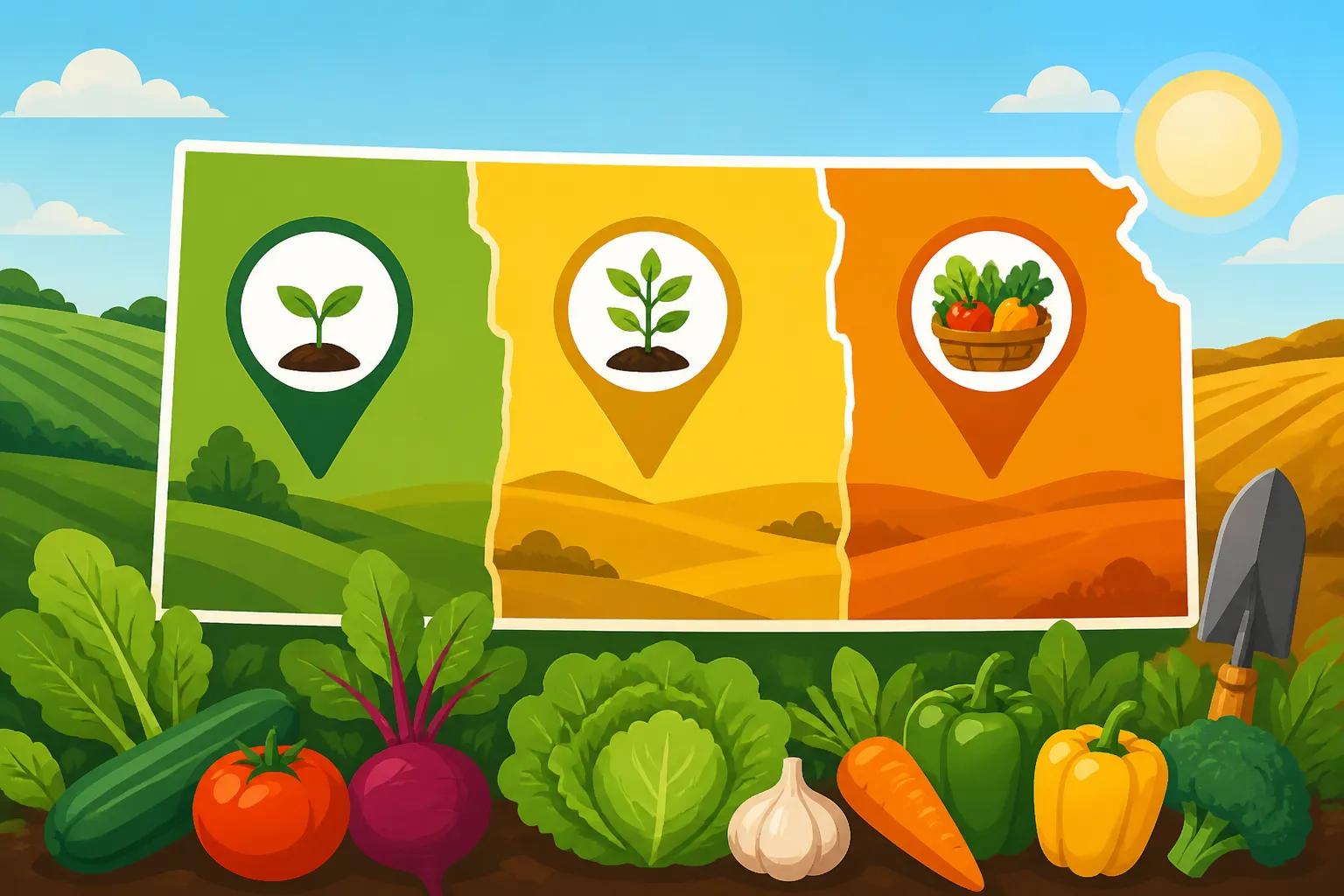
Start with the part of Kansas where you garden, but do not treat a regional label as a precise forecast. Eastern, central, and western Kansas differ in their seasonal patterns, and northern and southern locations can also have different timing. These broad descriptions are useful for comparison, not substitutes for local observations.
A helpful calendar has three layers:
- Regional baseline: Use local frost information to understand the general spring and fall risk for your area.
- Garden-site adjustment: Account for shade, slope, wind exposure, drainage, and nearby structures.
- Crop-specific adjustment: Match the planting decision to the crop’s tolerance for cold, its preferred soil conditions, and the time it needs to mature.
This approach avoids a common mistake: choosing one date from a statewide chart and assuming it applies equally to every vegetable and every yard. A cool-season crop and a heat-loving crop may need very different conditions, even when planted in the same bed.
| Garden situation | How to adjust | What to watch |
|---|---|---|
| Cool, exposed site | Be cautious about early warm-season planting; wait for suitable soil and lower freeze risk | Cold soil, wind, and exposed young transplants |
| Sheltered, sunny site | The garden may warm sooner, but do not assume frost risk has passed | Forecast lows and cold-air pockets nearby |
| Heavy or wet soil | Delay sowing if the seedbed stays cold, sticky, or waterlogged | Slow emergence, crusting, and poor drainage |
| Fast-draining soil | Check moisture before and after sowing; dry soil can slow or interrupt establishment | Uneven germination and drying winds |
| Short fall window | Prioritize crops that can mature in the remaining season | Days to maturity and the expected fall temperature decline |
| Warm, long fall conditions | Consider a later planting or a second sowing when crop needs allow | Heat stress at establishment and time left before frost |
When deciding how much to shift a date, avoid adjusting by a fixed number of days unless a local source specifically supports that method. A garden’s microclimate can make early planting seem successful one year and risky the next. Instead, use signs that the planting conditions are actually suitable.
For spring, check whether the soil is workable and whether the forecast supports the crop’s cold tolerance. For fall, estimate how much time remains for the crop to grow, then include a margin for slower growth as temperatures cool and daylight decreases. The crop may need longer than the packet’s stated maturity period if growing conditions are less favorable than those assumed by the seed company.
Regional calendars also need room for year-to-year variation. A warm spring can tempt gardeners into sowing too early, while a cool stretch can delay both soil warming and seedling growth. Do not let a calendar date overrule the current forecast, soil condition, or crop requirements. Planning Around Kansas Freeze Windows and Seasonal Temperature Swings offers a useful way to think about those changes without treating a seasonal average as a guarantee.
Adjust spring planting by crop type
Spring planting is easier to plan when crops are grouped by what they need, rather than listed in one long sequence of dates. Some vegetables can be sown in cool conditions; others need warm soil and a lower risk of frost. Transplants can give certain crops a head start, but they still need proper hardening and a suitable outdoor planting window.
Cool-season crops
Cool-season vegetables are the natural starting point for spring planning. Many can be sown or transplanted while the weather is still cool, though tolerance varies by crop and by stage of growth. Seeds may germinate slowly in cold soil, and young plants can still suffer from severe or prolonged cold.
That means “tolerates cool weather” is not the same as “grows well in any early-spring conditions.” Check that the bed is workable and not saturated. If the soil is cold and wet, seeds may sit for a long time or fail to emerge evenly. A delay can be better than sowing into conditions that prevent reliable establishment.
A practical sequence is to prepare the bed when the soil is no longer excessively wet, then sow crops according to their individual needs. If one crop is already planted and another is not, that does not mean the whole garden is behind. Cool-season crops often have a flexible planting window, and staggered sowings can spread harvests over time. See Direct Sowing vs Transplants for Kansas Cool-Season Crops for help choosing the right method.
Warm-season crops
Warm-season crops require more caution. Tomatoes, peppers, cucumbers, beans, squash, and similar vegetables are vulnerable to cold conditions, and many perform poorly if planted into cool soil. A mild afternoon is not enough evidence that it is safe to plant: nights can still be cold, and a late freeze can damage or kill tender growth.
Wait for conditions that fit the crop, not merely for a date associated with the last expected frost. Check the forecast, soil warmth, and the plant’s tolerance. A sheltered bed may be ready sooner than an exposed one, but it remains vulnerable if cold air settles or the forecast changes.
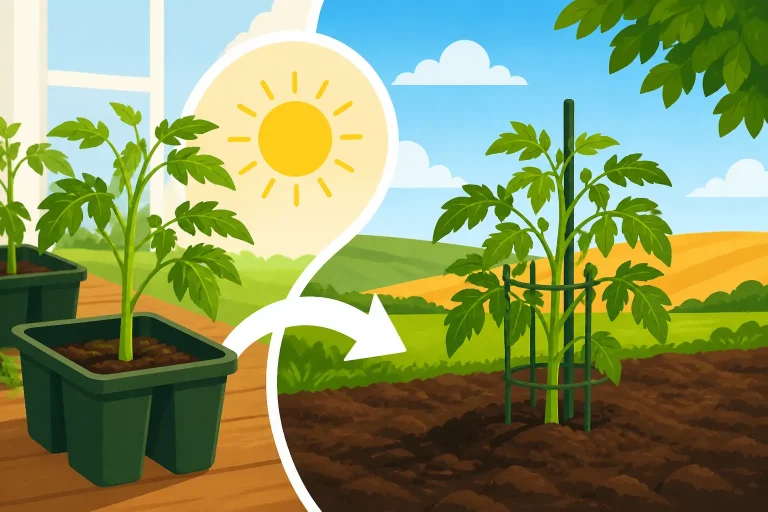
For transplants, include the time needed to harden seedlings before setting them outdoors. Plants raised indoors have not experienced full sun, wind, or outdoor temperature swings. Moving them straight from a protected space into the garden can cause stress, even when frost is no longer likely. Hardening Off Kansas Pepper Starts Before Setting Out explains the transition, and When to Move Tomato Transplants Outdoors in Kansas focuses on the decision for tomatoes.
Direct sowing can also be delayed by cold soil. Seeds of heat-loving crops may rot, emerge slowly, or produce uneven stands when planted before conditions suit them. If you are deciding between starting indoors and sowing outside, Indoor Seed Starting for Kansas Garden Crops covers how to plan the indoor stage.
Use the forecast and the soil together
A local frost estimate gives a seasonal reference point, while a short-range forecast helps with the immediate decision. Neither one replaces checking the soil and the crop. Consider postponing planting when the forecast shows a cold spell, the bed is wet and compacted, or the soil remains too cool for the crop.
A raised bed may warm faster than surrounding in-ground soil, but it can also dry out more quickly. A south-facing wall can provide warmth, while a low area can hold cold air. These differences are reasons to observe your own garden, not to assume that every sheltered spot is safe.
For crops that need consistently warm conditions, waiting can protect the investment in seed or transplants. It may also reduce the time a young plant spends stalled in poor conditions. The best spring timing is not always the earliest possible timing; it is the window that gives the crop a reasonable chance to establish and grow steadily.
Plan fall planting by counting backward from harvest
Fall planting is a scheduling problem in reverse. Instead of asking only when a crop can go into the ground, estimate when you need to plant so it has time to produce before conditions become unfavorable.
Begin with the expected harvest window, then count backward using the seed packet’s days-to-maturity information as a starting estimate. That number is not a guarantee. It may assume favorable growing conditions, and the crop may take longer if it emerges slowly, faces heat stress, or grows through shortening days and cooler weather.
The basic process is:
- Choose a likely harvest period. Use local fall frost information and the crop’s cold tolerance to decide how late you are willing to rely on outdoor production.
- Check days to maturity. Note whether the packet counts from sowing or from transplanting; the starting point can differ.
- Allow time for establishment. Seeds need time to germinate, and transplants need time to recover and root.
- Add a safety margin. Cool weather and shorter days can slow growth, so do not schedule right up to the last possible day.
- Recheck the forecast and bed conditions. Heat, dry soil, or heavy rain can affect establishment even when the calendar looks favorable.
For fall gardens, maturity time matters as much as frost tolerance. A crop may survive light cold yet still fail to reach a useful harvest if planted too late. Conversely, a crop with a relatively short time to maturity may be a realistic option after an earlier crop is cleared.
Some gardeners make a second sowing of a fast-growing crop to extend harvest. That works best when the new planting has enough time and moisture to establish. Avoid assuming that a spring planting schedule can simply be repeated later in the year: fall soil may be warm and dry, and seedlings can struggle during hot weather. Shade, steady moisture, and careful seedbed preparation can help, depending on the crop and site. Staggering Kansas Seed Sowings to Extend Your Vegetable Harvest and Planning a Kansas Fall Vegetable Garden Before First Freeze provide more detail on those choices.
Harvest timing also depends on what you want to eat. A crop harvested young may be usable sooner than one grown to full size, while some crops store better or taste better at a particular stage. Decide what counts as a successful harvest before you choose the planting date.
Adjust harvest expectations to real growing conditions
A calendar can estimate when a crop might be ready, but harvest is not controlled by the calendar alone. Days to maturity on a packet are a planning reference. Temperature, sunlight, water, soil conditions, spacing, pests, and plant stress all affect how quickly a vegetable develops.
Use the stated maturity time to set an initial expectation, then observe the crop. Check for the size, color, firmness, or other harvest signs appropriate to that vegetable. If a plant is growing slowly, look for a cause before assuming it is simply late. Cold soil, poor drainage, crowding, heat stress, and inconsistent moisture can all limit growth.
A few practical habits help keep harvest estimates realistic:
- Record the actual sowing or transplanting date. This makes it easier to compare your results across seasons.
- Note conditions that affected growth. Record cold snaps, heat, dry spells, and delayed emergence.
- Use more than one cue. Combine the estimated maturity period with the plant’s appearance and the crop’s harvest signs.
- Pick regularly when appropriate. Some crops produce more when harvested at the right stage and frequency; others are harvested once.
- Keep a margin in fall. A crop that is nearly ready may not finish if cold arrives sooner than expected.
If a crop is behind schedule, the reason matters. A planting date may have been reasonable, but the soil could have stayed cold, the seedbed may have dried out, or a transplant may have paused while recovering. Adjusting the calendar for next season means learning from those conditions, not simply shifting every crop by the same amount.
Harvest estimates can also vary by region within Kansas. A garden with a longer stretch of favorable conditions may allow a second planting or a later harvest than a more exposed site. Rather than assuming that a crop is “too late” based on a statewide calendar, compare its remaining time to maturity with the conditions you expect locally. Counting Days to Harvest Under Real Kansas Weather Conditions and Estimating Kansas Harvest Dates by Region and Seasonal Weather offer more ways to make those estimates useful.
Make a calendar for your own garden
A personal planting calendar does not need to be complicated. A notebook, spreadsheet, or wall calendar can track the information that actually changes your decisions. The goal is not to predict every weather event; it is to identify patterns and make better adjustments over time.
For each crop, record:
- The garden bed or site where it was planted
- The sowing or transplanting date
- Whether it was direct-sown or started indoors
- Soil and weather conditions at planting
- Germination or transplant establishment
- Harvest start and end
- Any problems that changed the expected timing
Keep site differences separate. If one bed is shaded and another is exposed to afternoon wind, they should not necessarily share the same planting assumptions. A small number of clear observations is more useful than a long record that is difficult to interpret.
At the end of the season, review what happened. Did seeds emerge quickly? Did transplants pause after planting? Did a fall crop reach a good harvest before cold weather? Did a low section of the garden experience frost sooner than the rest? Use those observations to make modest changes next time.
A simple planning sequence for each planting is:
- Identify the crop group. Decide whether the crop tolerates cool conditions or needs warmth.
- Check regional frost information. Use it as a probability-based guide, not a fixed boundary.
- Check the garden site. Consider slope, exposure, shade, soil drainage, and nearby structures.
- Check current conditions. Look at the forecast and whether the soil is ready to work.
- Choose a sowing or transplanting window. Avoid treating a single day as the only opportunity.
- Estimate harvest timing. Use days to maturity as a starting point and allow for slower growth.
- Record the result. Use what happens in your garden to refine the next season’s plan.
If you want to compare timing across locations, keep the crop and method consistent. For example, compare direct-sown beans in the same type of bed across different seasons, rather than comparing beans in one year with a different crop in another. This will not create a perfect forecast, but it can reveal whether your garden tends to warm or cool earlier than the regional baseline.
For additional context, Regional Planting Differences Across Kansas Counties can help frame why neighboring areas may need different schedules. If your garden is in an especially cool pocket, Adjusting Planting Calendars for Cooler Northern Kansas Pockets focuses on another useful kind of regional adjustment.
Common timing mistakes and how to avoid them
Treating frost estimates as guarantees
A frost estimate is a probability, not a promise. Planting a tender crop just because a reference date has passed can still be risky if the forecast calls for cold conditions. Keep tender plants protected or delay planting when the immediate weather is unfavorable.
Planting every crop at once
Vegetables do not all share the same temperature needs. Group crops by their preferred conditions and plant them in waves. Cool-season crops, warm-season transplants, and heat-loving direct-sown crops each have different decision points.
Following a statewide calendar without checking the garden
A broad calendar can provide a useful outline, but it may not reflect your elevation, soil, slope, or exposure. A low bed and a sunny raised bed can behave differently even within one yard. Use a local baseline, then make site-specific adjustments.
Starting fall crops too late
For fall planting, the first frost is only part of the calculation. The crop must have enough time to mature, and growth can slow as conditions cool and days shorten. Count backward from the harvest you want and include time for establishment.
Assuming an early planting always gives an early harvest
Seed planted into cold, wet soil may take longer to emerge than seed sown later into better conditions. Transplants moved outdoors too soon can also stall. The earliest possible planting is not necessarily the quickest path to a harvest.
Ignoring water and soil condition
A planting window is only useful if seeds and transplants can establish. Dry soil can interrupt germination; waterlogged soil can limit growth or damage roots. Check the bed before sowing and continue to monitor moisture as conditions change. For water planning, Watering Garden Beds During Dry Kansas Summers can help you think through how dry weather affects a planting schedule.
Frequently Asked Questions
Is there one best planting calendar for all of Kansas?
No. Regional frost patterns, garden exposure, soil, and crop requirements vary. Use local frost information as a starting point, then adjust for your site and the vegetable you are growing.
Should I plant warm-season vegetables as soon as the expected last frost date passes?
Not automatically. Frost estimates are probabilities, and warm-season vegetables also need suitable soil and weather conditions. Check the forecast and the crop’s needs before planting or transplanting.
How do I decide whether a vegetable is too late to plant?
Compare the time remaining before unfavorable conditions with the crop’s days to maturity, allowing for slower growth and establishment. The stated maturity period is an estimate, not a guarantee.
Can I use the same planting dates every year?
You can use last year’s dates as a starting point, but conditions change from season to season. Review frost risk, soil readiness, and the forecast each time, then keep records to improve your future calendar.
Disclaimer
This article is for general informational purposes only and does not constitute professional advice. Laws, prices and regulations vary by location and change over time. Consult a qualified professional for guidance on your specific situation. Kansas Gardening Guide is not a government agency and is not affiliated with any university extension, state department of agriculture or other government agency.